Katja Washington · 7 November 2026
Data Sovereignty Challenges Influencing Storage Configurations for Research Data in European Universities
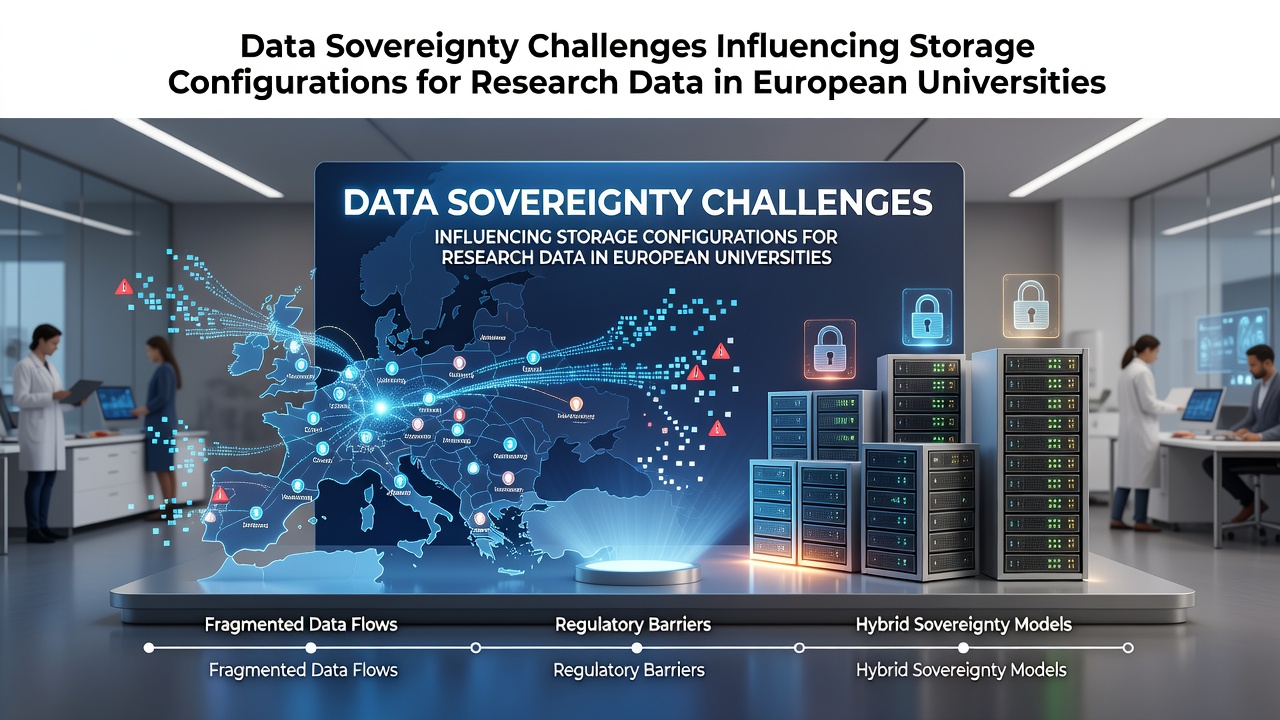
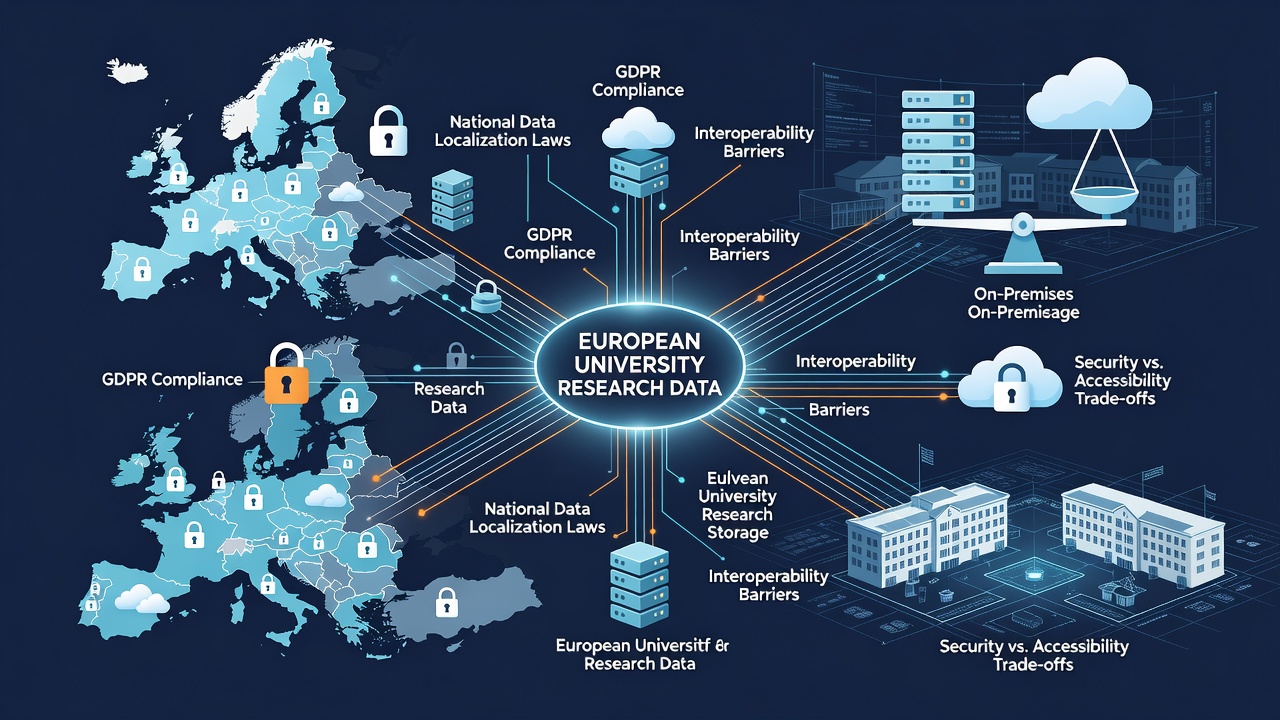
European universities manage vast amounts of research data under strict sovereignty rules that require data to remain within specific jurisdictions, and these requirements directly shape how institutions configure their storage systems. Regulations like the General Data Protection Regulation impose residency obligations, while cross-border transfer rulings such as the 2020 Schrems II decision have limited reliance on certain non-EU cloud providers. Universities therefore evaluate storage architectures that keep sensitive datasets inside national or EU borders.
Regulatory Framework Driving Storage Decisions
National laws in countries including Germany, France, and the Netherlands supplement EU-wide rules by mandating that research data involving personal information or state-funded projects stays on domestic servers. Observers note that compliance teams at institutions such as the University of Helsinki and ETH Zurich routinely audit storage locations to avoid penalties. As of November 2026, updates to the European Data Protection Board guidelines have clarified encryption standards for research repositories, prompting several universities to upgrade their on-premise infrastructure.
Institutions often combine local object storage with encrypted replication across multiple EU data centers, which satisfies residency rules while maintaining accessibility for collaborative projects. Data indicates that hybrid setups now appear in over 60 percent of research computing centers surveyed by European university consortia.
Technical Configurations Adopted by Universities
Storage configurations typically feature software-defined storage layers that enforce geographic tagging, so files containing personal identifiers cannot migrate outside approved regions. Administrators implement policy engines that block transfers to jurisdictions lacking adequacy decisions. Researchers at institutions in Scandinavia have documented reduced latency when data remains on regional clusters rather than routed through global providers.
Many universities deploy tiered storage where hot research data sits on flash arrays inside national borders, while colder archives use tape libraries located in certified EU facilities. This approach cuts costs yet preserves sovereignty. Those who have studied these systems report that automated compliance checks integrated into storage management platforms catch potential violations before they reach production workloads.
Impact on International Collaborations
Joint projects with partners outside the EU require additional safeguards such as data processing agreements and technical measures that prevent unauthorized access. Universities in Belgium and Austria have established dedicated transfer impact assessment teams that review every external data-sharing request. According to reports from the European Data Protection Board, such assessments now form part of standard grant application processes for Horizon Europe funding.
Some institutions maintain separate storage environments for international collaborations, isolating them from domestic research datasets. This separation reduces risk while still allowing controlled access through secure gateways. Figures from academic IT networks reveal that encrypted VPN tunnels and zero-trust architectures have become standard in these partitioned systems.
Case Examples from Specific Institutions
One research group at a Dutch university shifted its genomics dataset to a sovereign cloud operated by a local provider after determining that previous configurations risked non-compliance. The move involved reconfiguring metadata tagging and implementing new retention policies aligned with national health data laws. Another team in Portugal adopted a multi-cloud strategy restricted to providers with data centers inside the EU, which allowed continued use of advanced analytics tools without violating residency rules.
Similar adjustments appear at universities in Poland and Italy, where national funding agencies now require explicit storage location declarations in project proposals. These requirements have accelerated adoption of open-source storage platforms that support fine-grained location controls.
Emerging Tools and Standards
Standards bodies continue to develop specifications for verifiable data residency, including cryptographic proofs that confirm data location. Universities increasingly integrate these tools into their storage stacks to streamline audits. A study coordinated across several Baltic institutions showed that automated verification reduced manual compliance checks by nearly half.
Training programs for research data managers now include modules on sovereignty-aware storage design, ensuring staff understand both technical and legal dimensions. Professional networks across Europe share configuration templates that have proven effective in meeting multiple overlapping regulations.
Conclusion
Storage configurations in European universities continue to evolve in response to data sovereignty requirements, with institutions favoring hybrid on-premise and regionally hosted solutions that satisfy residency mandates. Technical measures such as policy engines, geographic tagging, and partitioned environments allow research to proceed while meeting regulatory demands. Ongoing guideline updates and new verification standards support these adaptations across the continent.